
Regenexx Alternative to Knee Replacement: Which Is Right for Your Osteoarthritis?

If a surgeon has told you your knee is "bone on bone," you are probably asking a simple question: is there anything worth trying before a knee replacement? For many people with knee osteoarthritis, Regenexx is the option that comes up. It is a non-surgical, image-guided procedure that uses your own cells, and it is not right for every knee.
This guide compares a Regenexx alternative to knee replacement side by side: who each option fits, what the evidence actually shows, what recovery looks like and how the costs work. It is written by the team at Dr. Dan Williams, a board-certified osteopathic physician in Carmel, Indiana, who offers Regenexx procedures along with prolotherapy, PRP and osteopathic manipulation for patients across the greater Indianapolis area. The goal is to help you walk into your next appointment with better questions, not to promise a result.
What Is the Difference Between Regenexx and Knee Replacement?
Knee replacement is surgery. The surgeon removes the damaged cartilage and bone surfaces and replaces them with metal and plastic implant parts. Regenexx is a regenerative medicine approach. It takes cells or platelets from your own body, concentrates them and injects them precisely into the damaged area under imaging guidance. Your joint stays your own.
Regenexx uses two main types of injectate:
Regenexx SD (bone marrow concentrate): Bone marrow is drawn from the back of the hip, an area rich in repair cells, then concentrated and injected into the knee.
Regenexx SCP (platelet procedures): Healing growth factors are drawn from your own blood and concentrated to a purer, stronger product than typical PRP. Platelet procedures are commonly used for mild arthritis and soft tissue injuries.
Dr. Williams reviews your exam and imaging to decide whether bone marrow concentrate or a platelet-based treatment, or neither, fits your knee.
| Factor | Regenexx | Knee Replacement |
|---|---|---|
| What it is | Image-guided injection of your own concentrated cells or platelets | Surgery that replaces joint surfaces with an implant |
| Your joint | Stays in place | Surfaces are removed and replaced |
| Downtime | Designed to limit time away from work and activities | Most people resume daily activities in 3 to 6 weeks |
| Insurance | Not reimbursable by health insurance or Medicare | Usually covered, subject to your plan |
| Long-term data | Small trials with up to 2 years of follow-up | More than 90% of modern implants working well at 15 years |
| Best fit | Mild to moderate arthritis without severe deformity | Severe pain, stiffness or deformity that limits daily life |
Who Is a Good Candidate for Regenexx?
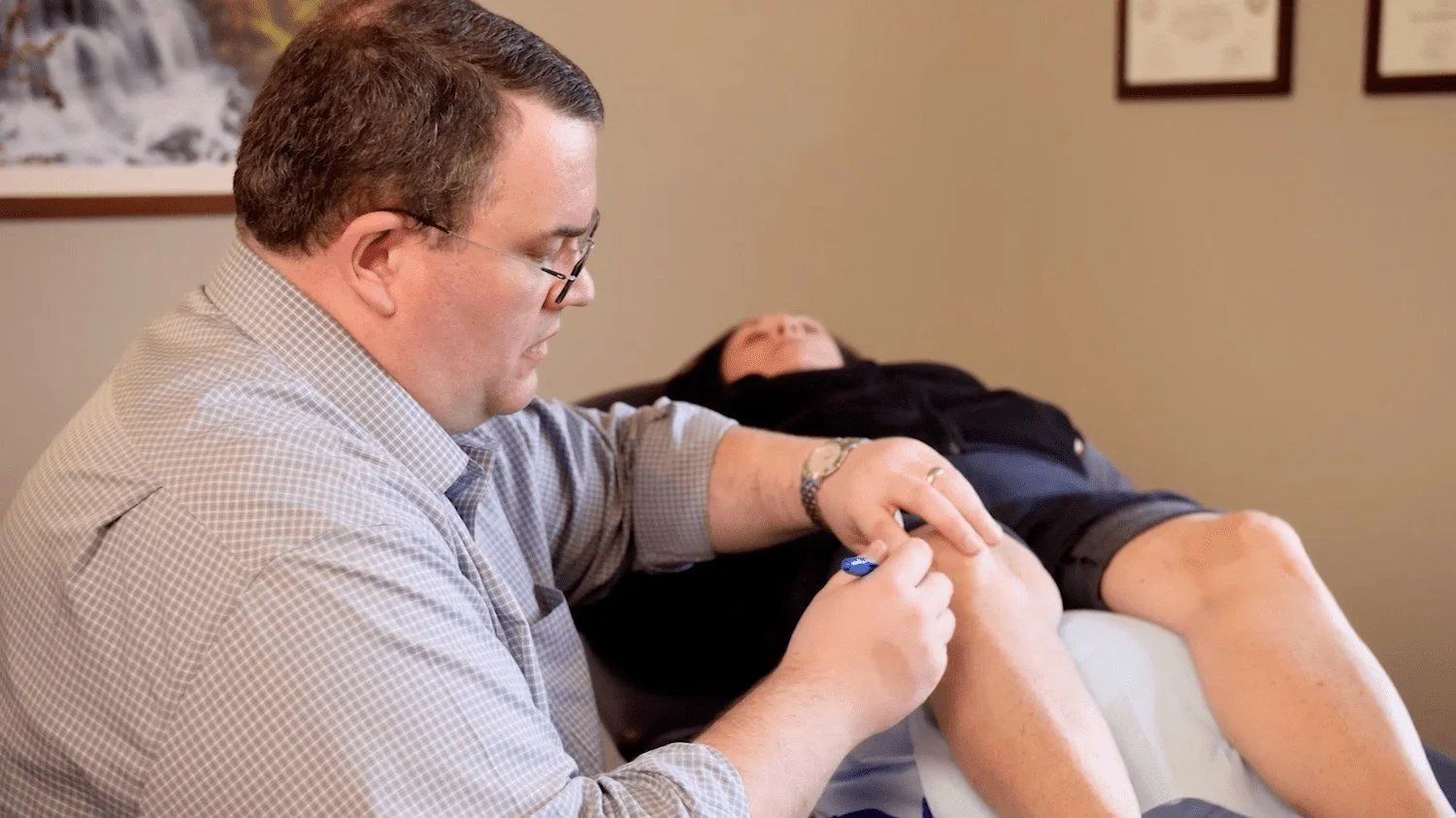
A good candidate for Regenexx usually has knee pain from osteoarthritis that has not improved enough with exercise, weight management or physical therapy, and wants to explore non-surgical options first. Many are in their 40s, 50s or 60s, still working, still active and not ready to give up months to surgical recovery.
Imaging matters a great deal. Arthritis is often graded on X-ray from mild to severe. The published Regenexx knee trial enrolled people with moderate arthritis, not end-stage joints. The American Academy of Orthopaedic Surgeons (AAOS) lists these as common reasons a surgeon recommends knee replacement:
Severe pain or stiffness that limits walking, climbing stairs or getting out of a chair
Moderate or severe pain at rest, day or night
Swelling that does not improve with rest or medication
A visible deformity, such as the knee bowing in or out
Little or no improvement from other treatments
If several of those describe you, injections are less likely to be enough on their own, and an honest evaluation should say so. If your knee falls in the early or moderate range, a regenerative option may be worth a structured trial, with surgery kept as the fallback rather than the first step.
It also helps to know what is driving the pain. Not every painful arthritic knee hurts because of cartilage loss alone. Loose or damaged ligaments, a meniscus problem or referred pain from the hip or foot can all play a part. Dr. Williams' page on the causes of knee pain explains these patterns, and his osteoarthritis treatment page covers why damaged ligaments, excess weight and genetics tend to combine over time.
First step: Complete the Regenexx candidate form with your symptoms and history. Dr. Williams' office reviews it and follows up about whether an evaluation makes sense for your knee.
What Does the Evidence Say About Regenexx for Knee Osteoarthritis?
Be careful with any clinic that quotes a single success rate for every knee. Here is what has actually been published, in plain terms.
The Regenexx knee trial
A 2018 randomized controlled trial in the Journal of Translational Medicine enrolled 48 people with moderate knee osteoarthritis. One group received image-guided bone marrow concentrate with platelet products, and the other group followed a home exercise program. At 3 months, the treated group showed greater improvement on a knee score and an activity scale, and most measures stayed improved through 2 years. Pain scores were not significantly different between groups at 3 months. The trial was small and was funded by Regenexx, and its lead author is a Regenexx shareholder.
Professional guidelines
The 2019 American College of Rheumatology and Arthritis Foundation osteoarthritis guideline recommended against PRP and stem cell injections for knee and hip osteoarthritis, largely because of limited high-quality evidence and wide variation in how the products are prepared.
Knee replacement
According to AAOS, more than 700,000 total knee replacements are performed each year in the U.S., and more than 90% of modern implants are still functioning well 15 years later. Serious complications, including joint infection, occur in fewer than 2% of patients.
Put simply, regenerative injections for the knee have promising early results from small trials, but no large independent trial has settled the question, and major guidelines have not endorsed them. Knee replacement has decades of data behind it. Neither option is risk free, and Regenexx, like any procedure, can fail to help. Regenexx does maintain a patient outcome registry that tracks tens of thousands of procedures, which you can ask about during your visit.
What Happens During a Regenexx Knee Procedure?
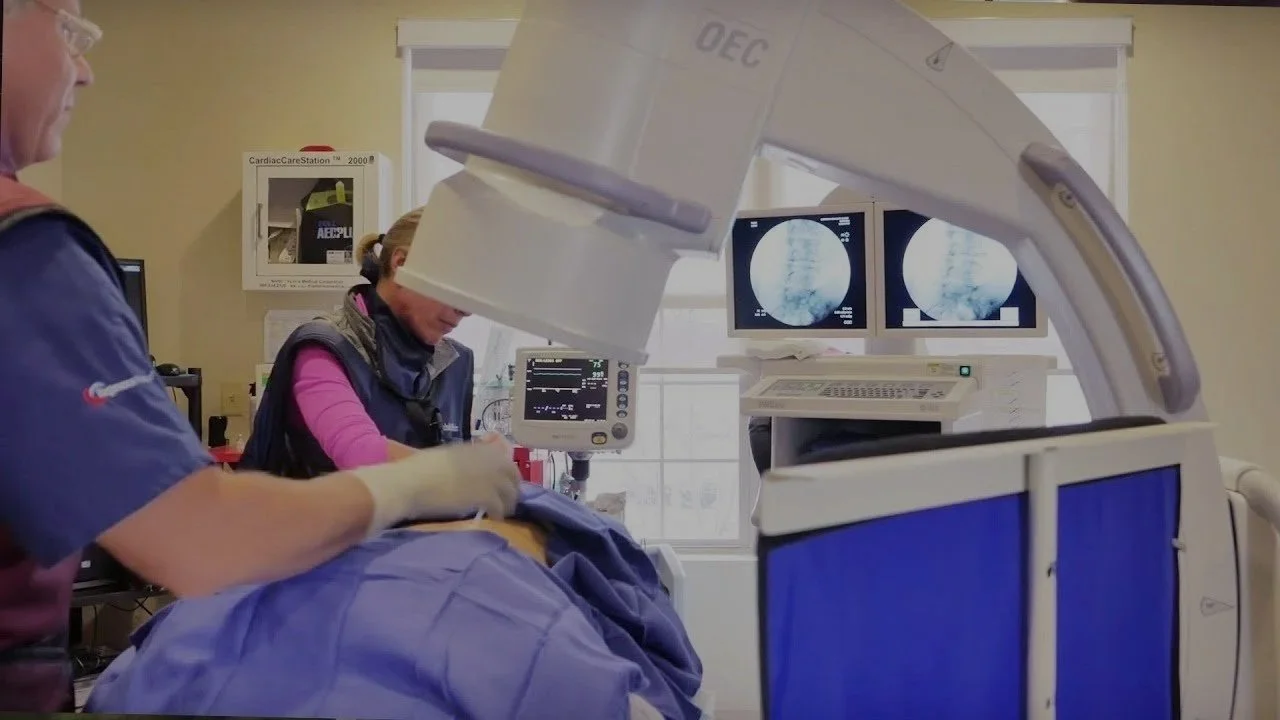
Knowing what to expect makes the decision easier. A typical path at Dr. Williams' Carmel office looks like this:
1. Candidate review: You submit the candidate form and any recent X-rays or MRIs.
2. Evaluation: Dr. Williams talks through your goals, examines the knee and reviews imaging. If it helps confirm the source of pain, he may use a diagnostic numbing injection.
3. Procedure day: For bone marrow concentrate, a small amount of marrow is drawn from the back of the hip under local numbing medicine, concentrated and injected into the knee using ultrasound or fluoroscopy guidance.
4. Recovery and rehab: Most people go home the same day. Soreness for a few days is common, and you follow a guided return to activity rather than a long surgical rehab.
Dr. Williams rarely treats the knee as an isolated part. His prolotherapy and PRP page explains that injections work best as part of a full plan, so many patients also benefit from osteopathic manipulation to restore joint motion, medical acupuncture for pain control, and nutrition changes that reduce inflammation and support healthy weight.
Recovery and Downtime: How the Two Paths Compare
After knee replacement, AAOS reports that most people resume normal daily activities within 3 to 6 weeks and return to driving at about 4 to 6 weeks, with full recovery and strength building taking longer. Surgery usually involves a hospital stay or a surgical center visit, formal physical therapy and a period on a walker or cane.
Regenexx is an outpatient procedure designed to minimize time away from work, sports and family. That does not mean zero downtime. You may be asked to limit heavy loading for a period while the knee responds, and improvement tends to build over weeks to months rather than overnight. For people who care for family, run a business or travel, that difference in recovery often weighs heavily in the decision.
How Much Does Regenexx Cost Compared With Knee Replacement?
The payment models differ more than the price tags. Knee replacement is usually billed through health insurance, so your share depends on your deductible, copays and out-of-pocket maximum. Regenexx procedures are not reimbursable by health insurance or Medicare, so they are paid out of pocket.
Dr. Williams' office provides a fee after your evaluation, because the plan depends on your knee. For context, prolotherapy treatments at the practice start at $450 per injection and PRP treatments start at $1,800 per treatment. Dr. Williams works as an out-of-network provider and provides a detailed superbill after visits, which you can submit to your insurer; reimbursement depends on your plan. The payment and insurance FAQ explains how this works. When you compare options, count the whole picture: the procedure, rehab visits and time away from work.
Questions to Ask Before You Choose
1. What grade is my arthritis, and can I see my imaging? The answer tells you which options are realistic.
2. What results do you see in patients like me, including those who did not improve? A provider who cannot describe non-responders is not giving you the full picture.
3. What would make you recommend surgery for me? You want a clear threshold.
4. What is the total cost in writing, and what does insurance cover? This avoids surprises on either path.
5. If this does not work, what is my next step? Ask this of every provider you see.
Why Patients Choose Dr. Dan Williams for a Second Opinion
Dr. Dan Williams, DO, FAAO is board certified in neuromusculoskeletal medicine and a fellow of the American Academy of Osteopathy. He trained in prolotherapy using the Hackett-Hemwall technique, PRP and other regenerative medicine methods, and he served as Vice President of Certifying Board Services for the American Osteopathic Association. He has also assisted with NIH-funded research on osteopathic treatment for pain.
That background shapes how he evaluates a knee. As an osteopathic physician, he looks at how the hip, foot and spine load the joint, not just the X-ray, and he will tell you when surgery is the better choice. His aim is to help your body heal itself where that is realistic, and to avoid unnecessary medication and surgery.
Frequently Asked Questions
What is Regenexx?
Regenexx is a set of non-surgical orthobiologic procedures that use your own bone marrow concentrate or concentrated platelets, injected with ultrasound or fluoroscopy guidance, to treat joint, spine and soft tissue conditions. Dr. Dan Williams offers Regenexx procedures in Carmel, Indiana.
Is Regenexx a good alternative to knee replacement?
It can be for people with mild to moderate knee osteoarthritis who want to avoid or delay surgery. It is usually not enough for a knee with severe deformity or constant pain at rest. The published Regenexx trial compared it with exercise, not surgery, so there is no head-to-head trial.
Does insurance cover Regenexx for the knee?
No. Regenexx procedures are not reimbursable by health insurance or Medicare, so they are paid out of pocket. Knee replacement is usually billed through insurance, with your share set by your plan.
How long is recovery after a Regenexx knee procedure?
Most people go home the same day and have soreness for a few days. Activity is increased gradually, and improvement usually builds over weeks to months. Knee replacement recovery typically takes 3 to 6 weeks before most daily activities resume.
What is the success rate of Regenexx for knee osteoarthritis?
No single number applies to every knee. In a 2018 randomized trial, people treated with bone marrow concentrate improved more than a home exercise group at 3 months and stayed improved through 2 years, but the trial was small and company funded. Results vary by person.
How do I find out if I am a Regenexx candidate in Carmel or Indianapolis?
Complete the Regenexx candidate form on Dr. Dan Williams' website or call 317-819-4949. His office reviews your history and imaging and schedules an evaluation at 11590 N Meridian St, Suite 200, Carmel, IN 46032.
Get a Clear Answer for Your Knee in Carmel
Knee pain forces a decision, and you deserve a straight comparison before you make it. If you live in Carmel, Indianapolis, Fishers, Zionsville or nearby and are weighing a knee replacement, start with the Regenexx candidate form or request an appointment. Dr. Williams will review your history and imaging and tell you honestly what he thinks fits.
Visit: 11590 N Meridian St, Suite 200, Carmel, IN 46032
Call: 317-819-4949 | Hours: Monday to Friday, 8 a.m. to 5 p.m.
Bring any X-rays, MRIs and lab results from the last three years to your first visit and wear comfortable clothing so your knee can be examined. Treatment may begin at the first visit when appropriate. Traveling from out of town? The office is happy to help with travel and accommodations.
This article is for education and is not medical advice. Like all medical procedures, Regenexx procedures have a success and failure rate, and individual results vary.